Early
Spring 2012
Zen TESOL
debut
by Robb
Scott, Ed.D.
Perseverance
in Lamar
by Robb
Scott, Ed.D.
Why Textbooks?
by Ashley
Green
Seeing David
Hopkins in
Riyadh
by Robb
Scott, Ed.D.

/Index/
/Letters/
/Profiles/
/Search/
/Podcasts/
Subscribe
for free!
Permissions



Three Decades of Language Teaching and Cultural Learning
Who is the editor of ESL MiniConference Online?
Robb Scott next spent three years in Quito, Ecuador, South America. As director of Academia Benedict, a language school, he tripled enrollment numbers by changing textbooks and encouraging teachers to be more innovative. Next he started his own language school, Instituto Pionero, where he wrote the curriculum and taught ESL teacher-training workshops for Ministry of Education continuing development certificates. Dr. Scott also taught one year at Alberto Einstein junior high and two years at Academia Cotopaxi, an American international K-12 school, where he helped write a communicative curriculum, taught middle school ESL and advised the high school yearbook staff, including working in Spanish with a local printer.
During the 1987-88 academic year, while back at K.U. in Lawrence, he published an article, "Making Sense In ESL: A Set of Three Rhetorical Structures," first in Kansas Working Papers in Linguistics, and later in the ERIC Clearinghouse, ED342267.
Starting in autumn, 1992, Scott took graduate coursework in educational leadership at Teachers College, Columbia University, where he studied ESL teacher observation, second-language acquisition theory, and philosophy of education. He also served on advisory committees to the TC president and oversaw the student paper (TC News) as editor-in-chief.
In 1995, Scott was hired by Newsweek as an editorial assistant and education writer. From 1995 to 1998, he prepared weekly teacher guides and other materials for high-school social studies and ESL classrooms using the magazine in their curricula, and also researched and wrote for Newsweek publications, including a byline in the Kaplan/Newsweek Graduate School guide (1998). From 1998 to 2000, Robb Scott worked at two start-up dot.com's, shopguide.com and ibizresources.com, launching online newsletters at each and developing a distance-learning course in e-journalism for ibizresources.com . He also worked for Cablevision's "Power to Learn" as a technical instructor, teaching junior-high and high-school students to create Web projects. From 1997 to 2000, Scott was a part-time technical consultant, via distance and Internet, for California's Santa Cruz County district office of education, for whom he analyzed survey data, guided Web development and edited publications.
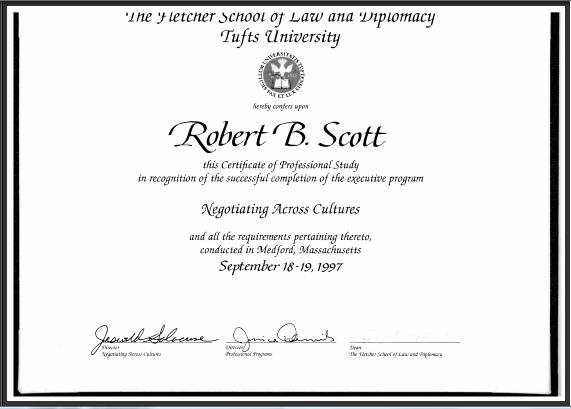
Dr. Robert Scott earned a certificate in "Negotiating Across Cultures," from the Fletcher School for International Law and Diplomacy, Tufts University, in 1997.
In autumn, 2002, Robb Scott joined the Special Education faculty at Fort Hays State University, in Hays, Kansas, as an assistant professor and coordinator of the ESOL program. From 2002 to 2005, he taught coursework for the Kansas state endorsement in ESOL and the Masters in ESOL offered by FHSU, also bringing these programs online by designing Blackboard coursework for delivery via the Fort Hays Virtual College.
In February of 2005, the ESOL endorsement program and the entire College of Education and Technology unit (32 programs) at FHSU was reviewed and fully accredited by the National Council for Accreditation of Teacher Education (NCATE). As part of this successful process, Dr. Scott designed an outcomes-assessment system for the ESOL program and served on the unit-wide Standard 1 (Candidate Knowledge, Skills, and Dispositions) and Standard 4 (Diversity) committees.
He was president of the Kansas Federation of the Council for Exceptional Children (kansascec.org)in the 2010-2011 school year and served as conference co-chair for a joint conference project with the Kansas Association of School Psychologists, 2008 KASP/CEC, in Junction City, Kansas, attended by 343 special educators, school psychologists, general educators, administrators, paraeducators, teacher candidates, and teacher educators from across the state. The conference focused on data-coaching, response to intervention (RTI), multicultural learners, and new roles for special educators and school psychologists in today's schools (Download the conference program book-Adobe pdf-here). Scott also represented Kansas CEC at the annual CEC leadership institute in Arlington, Virginia, in the summer of 2008.
During the 2010 calendar year, Dr. Scott worked at Lamar Community College in Lamar, Colorado, where he was the director of the Adult Transition Services department.
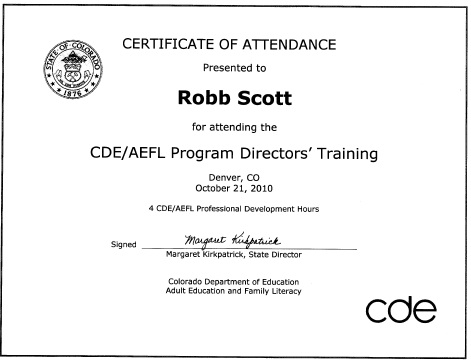
He also served on the board of directors for the Colorado Adult Education Professional Association (CAEPA). He led his department at LCC to a successful program review by the Colorado Department of Education's Adult Education and Family Literacy (AEFLA) office in September 2010, and served as a team member in the College's successful AQIP quality review later the same month.
Robb Scott also restructured the career development curriculum at Lamar Community College, converting it from life skills to a full Career Pathways curriculum built around technology skills, SCANS research, personal empowerment, WIN-based Work Keys exercises, and individual and group projects.
Click here for more info on Lamar!
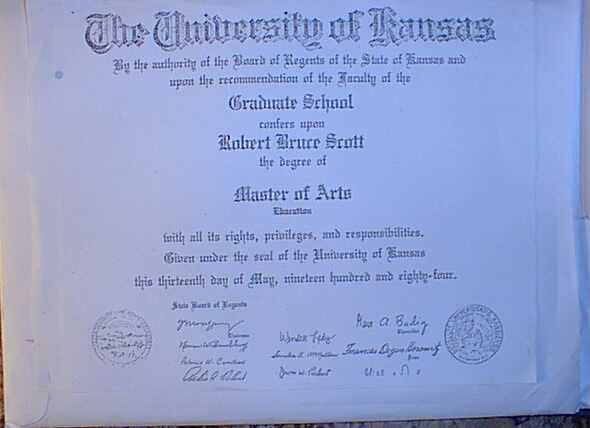
 Dr. Robert Bruce Scott began his ESL teaching career in 1982, as a graduate teaching assistant at the Applied English Center, University of Kansas, in Lawrence. He earned his M.A. in TESL from K.U. in 1984, and his masters research paper on the use of conversation flowcharts was published by the ERIC Clearinghouse for Language and Linguistics (ED 247 744 or FL 014 406)
.
Dr. Robert Bruce Scott began his ESL teaching career in 1982, as a graduate teaching assistant at the Applied English Center, University of Kansas, in Lawrence. He earned his M.A. in TESL from K.U. in 1984, and his masters research paper on the use of conversation flowcharts was published by the ERIC Clearinghouse for Language and Linguistics (ED 247 744 or FL 014 406)
. 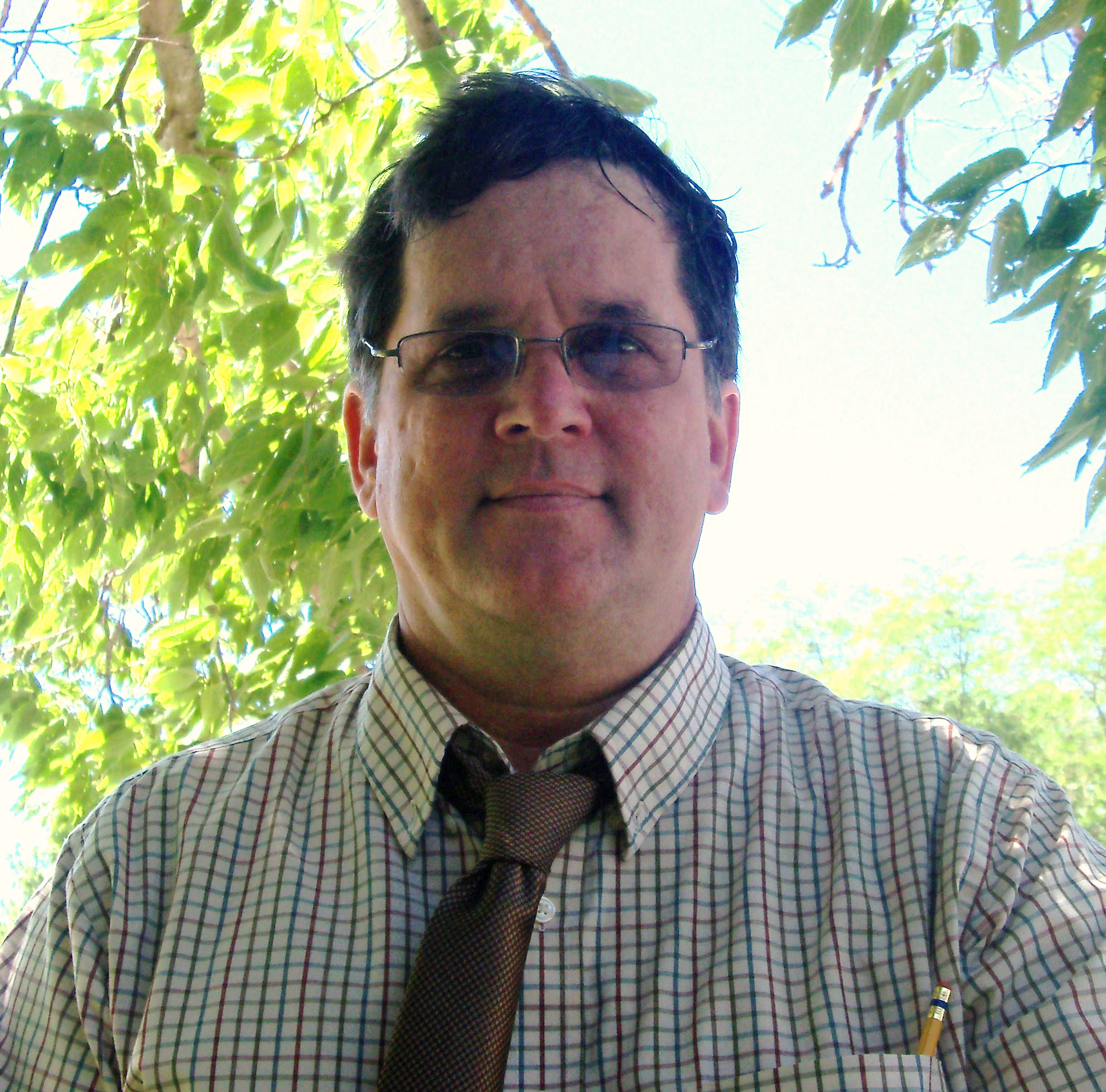 Scott's first job out of the university was as an English and journalism teacher at Kickapoo Nation School, in Powhattan, KS, where he encouraged Native American Indian high school students to read literature by and about Indians. He helped write a grant and chaperoned a senior class trip out to see Mesa Verde and the nearby Fort Lewis College, where American Indians receive free tuition, room and board.
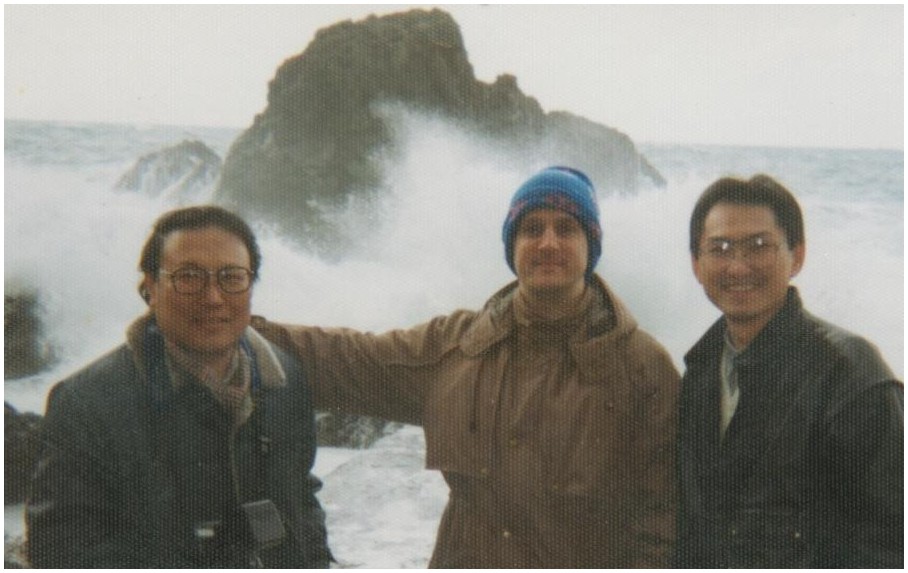 From 1988 to 1992, Robb Scott worked as an ESL professional in Japan. He was part of the advance team of teachers who started SIU-Carbondale's branch campus in Niigata prefecture. He taught, wrote ESL curriculum and coordinated a TOEFL test site at the University of Nevada-Reno's Tokyo campus. He served from 1989 to 1990 on the Executive Committee of Tokyo JALT (Japanese Association of Language Teachers) and presented papers and workshops on ESL teaching and CALL (computer-assisted language learning) all over Japan. Scott's final two years in Japan were spent at Chubu University, in Kasugai, where he was on the faculty of the Modern Language Department and worked as a senior lecturer in OPELT (Ohio Program for English Language Teaching), an ESL research and development team representing Ohio University (Athens, OH). He also presented on conversation flowcharts and CALL at the 1992 TESOL convention in Vancouver.
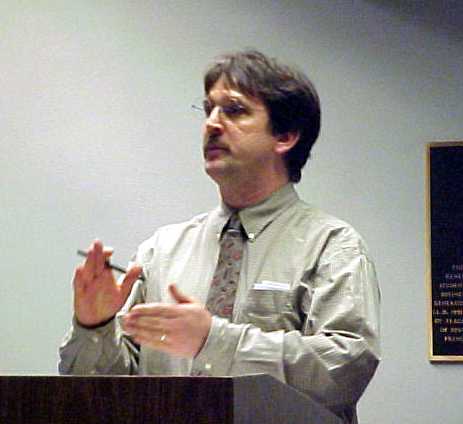 During most of the ten years he lived in New York City, Robb Scott continued to teach at and manage ESL programs for different language schools in the city. He presented on conversation activities, CALL and ESL program administration at local and state-wide venues, including NYS TESOL 2000 and 2001. He also received professional development from the New Jersey Teachers of English as a Second
Language and New Jersey Bilingual Educators (NJTESOL/NJBE,Inc.) in bilingual education and the "No Child Left Behind Act" (newly reauthorized ESEA).
During most of the ten years he lived in New York City, Robb Scott continued to teach at and manage ESL programs for different language schools in the city. He presented on conversation activities, CALL and ESL program administration at local and state-wide venues, including NYS TESOL 2000 and 2001. He also received professional development from the New Jersey Teachers of English as a Second
Language and New Jersey Bilingual Educators (NJTESOL/NJBE,Inc.) in bilingual education and the "No Child Left Behind Act" (newly reauthorized ESEA).
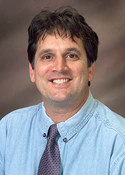 As a faculty member of the College of Education and Technology at Fort Hays, Dr. Robert Scott presented an invited workshop, "Encouraging Civil Discourse with Logical Conversation," at the first TESOL Peace Forum, at American University in Washington, D.C. He also received a small grant from the Kansas Department of Education to write a position paper on inclusive education, "Delivering on the Standards for All Kansas Students." In addition, graduate students in Scott's ESOL methods and ESOL assessment courses participated in the writing of the Kansas Curricular Standards for English to Speakers of Other Languages, with many of their instructional examples incorporated in the final draft approved by the Kansas State Board of Education in April 2004.
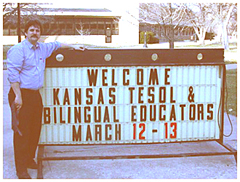 In March, 2004, Robb Scott chaired the conference planning committee for KATESOL/BE 2004, sponsored by the Fort Hays State University Department of Special Education/ESOL. At the conference,
he was named KATESOL President, and represented the 200+ members of the organization during the 2004-2005 year. He presented a workshop at TESOL 2005 in San Antonio, on how Web-technology was used to revitalize and grow the Kansas TESOL organization. He has served as Webmaster for both the Kansas TESOL and Kansas CEC (Council for Exceptional Children) Web sites.
In March, 2004, Robb Scott chaired the conference planning committee for KATESOL/BE 2004, sponsored by the Fort Hays State University Department of Special Education/ESOL. At the conference,
he was named KATESOL President, and represented the 200+ members of the organization during the 2004-2005 year. He presented a workshop at TESOL 2005 in San Antonio, on how Web-technology was used to revitalize and grow the Kansas TESOL organization. He has served as Webmaster for both the Kansas TESOL and Kansas CEC (Council for Exceptional Children) Web sites.
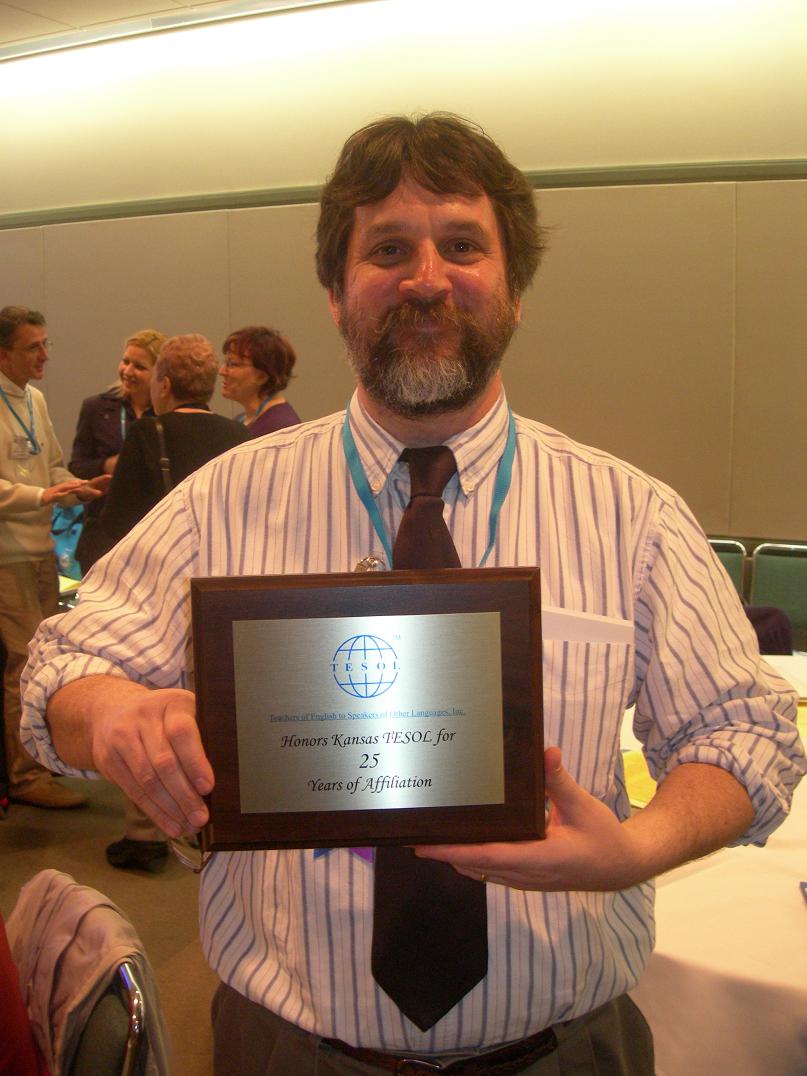 Robb Scott recently completed his doctorate in special education at Kansas State University, where he worked as an instructor in the Center for Intercultural and Multilingual Advocacy (CIMA), teaching ESL methodology to ESOL endorsement candidates, editing a textbook on assessment of ELLs, developing curriculum for distance coursework, and coordinating the 2006 KATESOL Conference, hosted by the CIMA Center and K-State. He taught international students in the English Language Program (ELP) at K-State from 2005
to 2009. He represented Kansas at the affiliate assembly of the 2007 TESOL convention in Seattle, where KATESOL received its 25-year award.
Robb Scott recently completed his doctorate in special education at Kansas State University, where he worked as an instructor in the Center for Intercultural and Multilingual Advocacy (CIMA), teaching ESL methodology to ESOL endorsement candidates, editing a textbook on assessment of ELLs, developing curriculum for distance coursework, and coordinating the 2006 KATESOL Conference, hosted by the CIMA Center and K-State. He taught international students in the English Language Program (ELP) at K-State from 2005
to 2009. He represented Kansas at the affiliate assembly of the 2007 TESOL convention in Seattle, where KATESOL received its 25-year award.
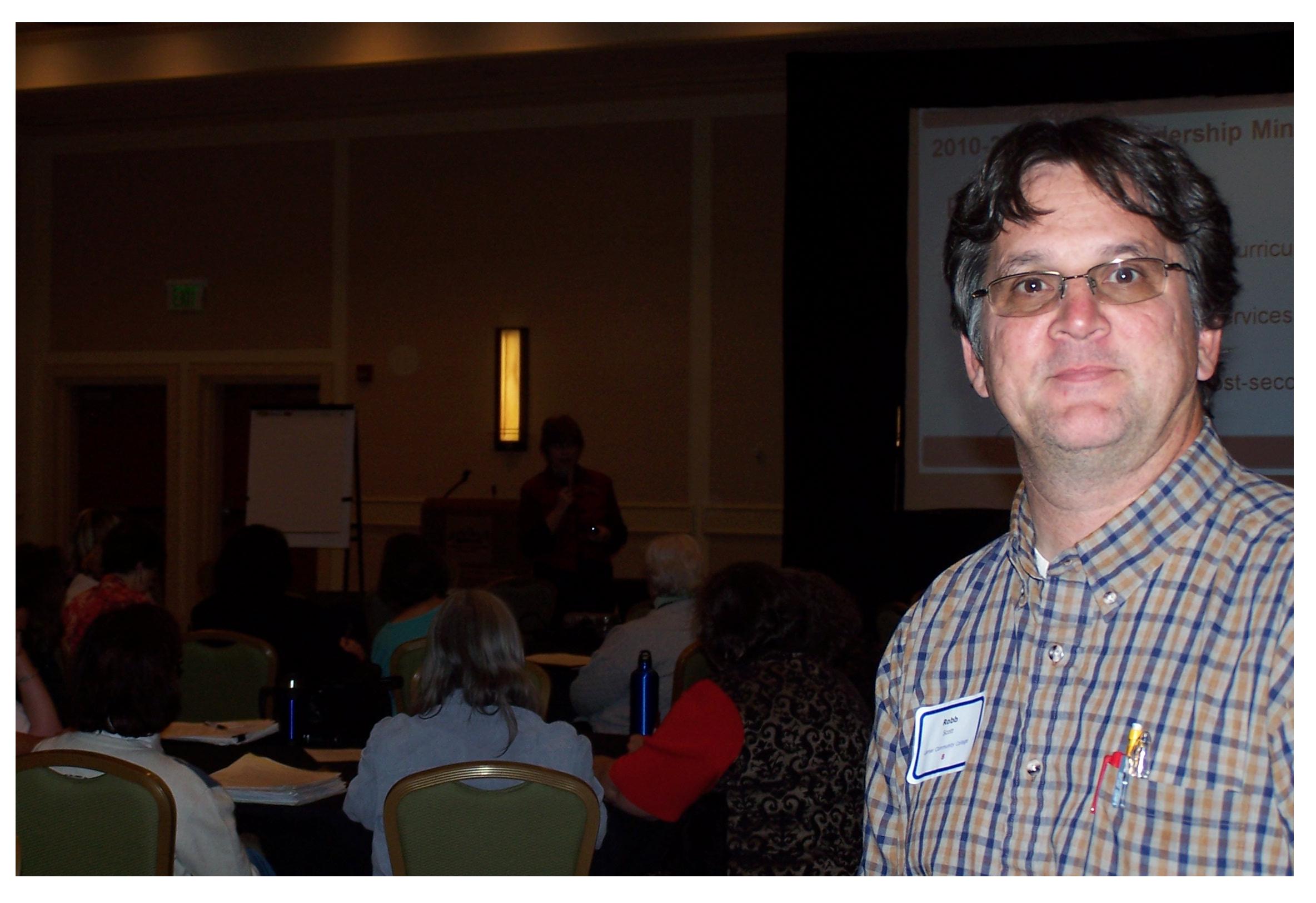 His doctoral research was focused on transition from high school to post-secondary for multicultural students.
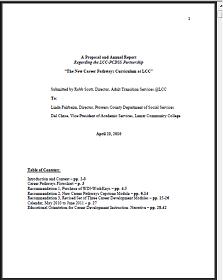 In the summer of 2010, Scott designed and taught an online course on teaching ESL to adults, by invitation from the AEFLA office at the Colorado Department of Education, as part of their Licensure for Instruction of Adults (LIA). He was budget manager for a federal grant (AEFLA) while at Lamar Community College and prepared two annual performance reports and one successful request for continuation. During his time at Lamar, Scott expanded the weekly hours of instruction in adult basic education and adult secondary education (GED-prep) courses, and developed manuals for special needs, student orientation, and teacher orientation, as well as revising the ESL curriculum.

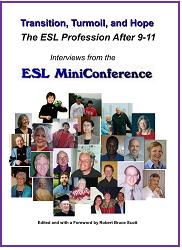
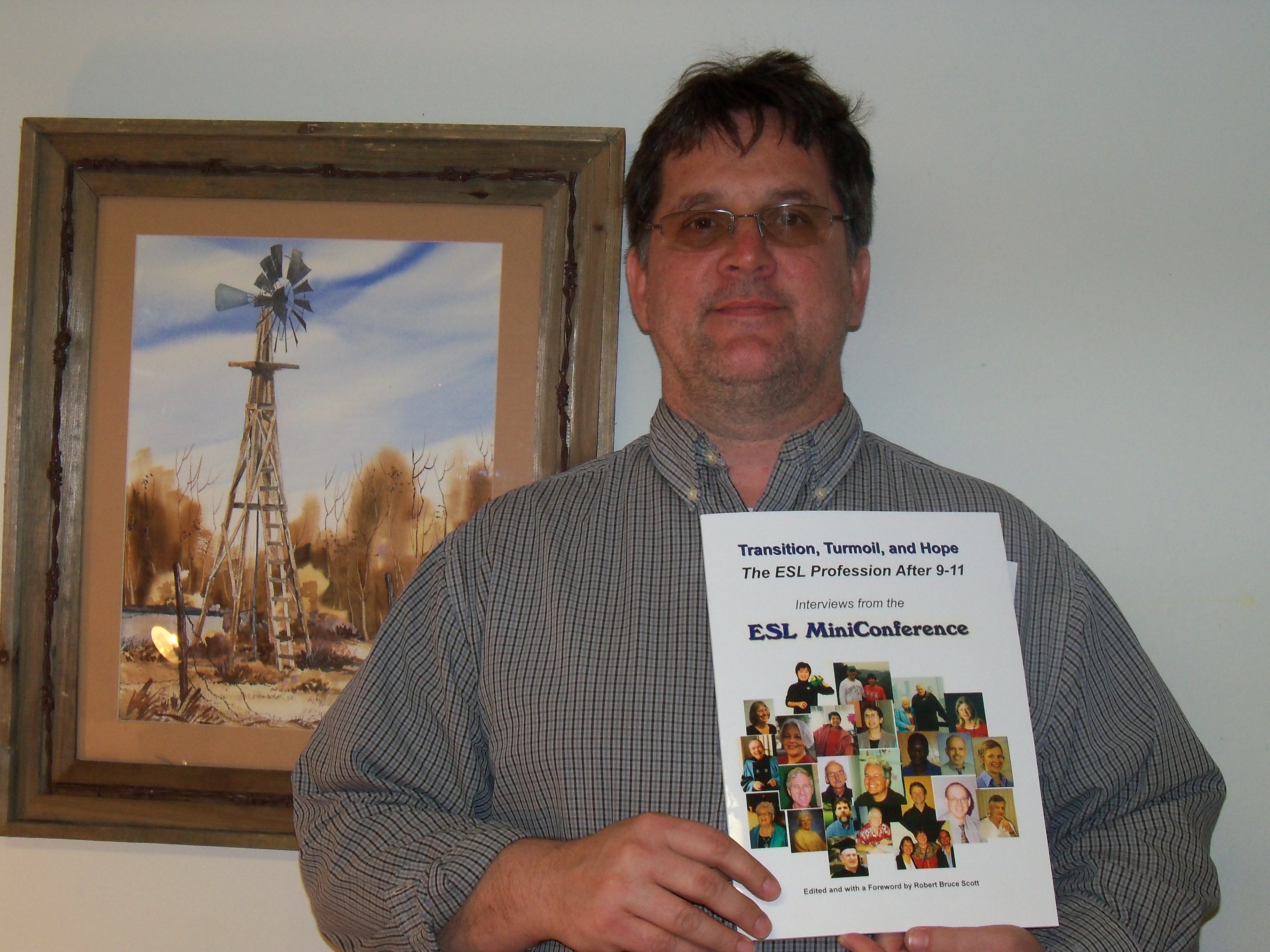
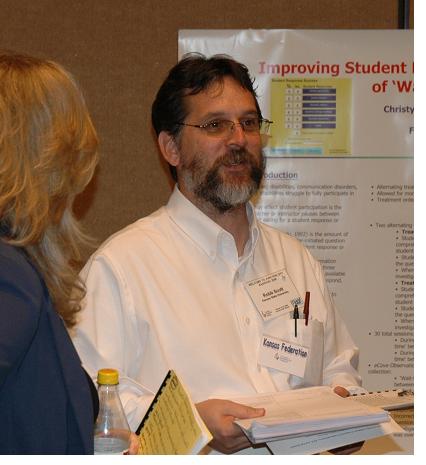 During nearly 30 years as an ESL/diversity professional, Dr. Robert Bruce Scott has built a reputation as a thoughtful educator who works change and always makes a positive contribution. He publishes ESL MiniConference Online to make it easier for busy professionals to share ideas and keep abreast of the latest trends. The ESL MiniConference project has generated a free e-book, "Transition, Turmoil, and Hope: the ESL Profession After 9-11
Robert Scott serves on the Board of Academic Advisors for TEFL International, a teacher-training organization, and on the Advisory Board for Time4English, an online service for English language learners. He has participated on ESOL and Adaptive Special Education program review teams for the Kansas Department of Education.
During 2010 and the first half of 2011, Robb Scott has decreased the frequency of new articles on the ESL MiniConference, and is in the process of transitioning to a new model, focused entirely on journal-style articles and professional development coaching. In August of 2011, Dr. Robert Bruce Scott successfully defended his dissertation, "Do Kansas Schools Address Multicultural Needs of Exceptional Students in Transition Practices? A Survey of Special Educators in Grades 9-12 with Direct Experience in Transition Planning for Culturally and Linguistically Diverse Students," at Kansas State University. His first professional presentation on his doctoral thesis was scheduled soon after, at the October meeting of the Council for Exceptional Children's Division of Career Development and Transition national conference in Kansas City.
2002-2011 ESL MiniConference Online